


In today’s digital workplace, efficiency and accessibility are essential to effective HR management. Employees expect quick, transparent ways to handle routine HR transactions—like filing leave requests, overtime notices, or schedule changes—without lengthy approval chains or piles of paperwork.
This is where Employee Self-Service (ESS) in HRIS makes all the difference. By integrating self-service tools into the Human Resource Information System (HRIS), companies can empower employees to take control of their HR needs—saving time, improving accuracy, and promoting accountability.
What Is Employee Self-Service (ESS) in HRIS?
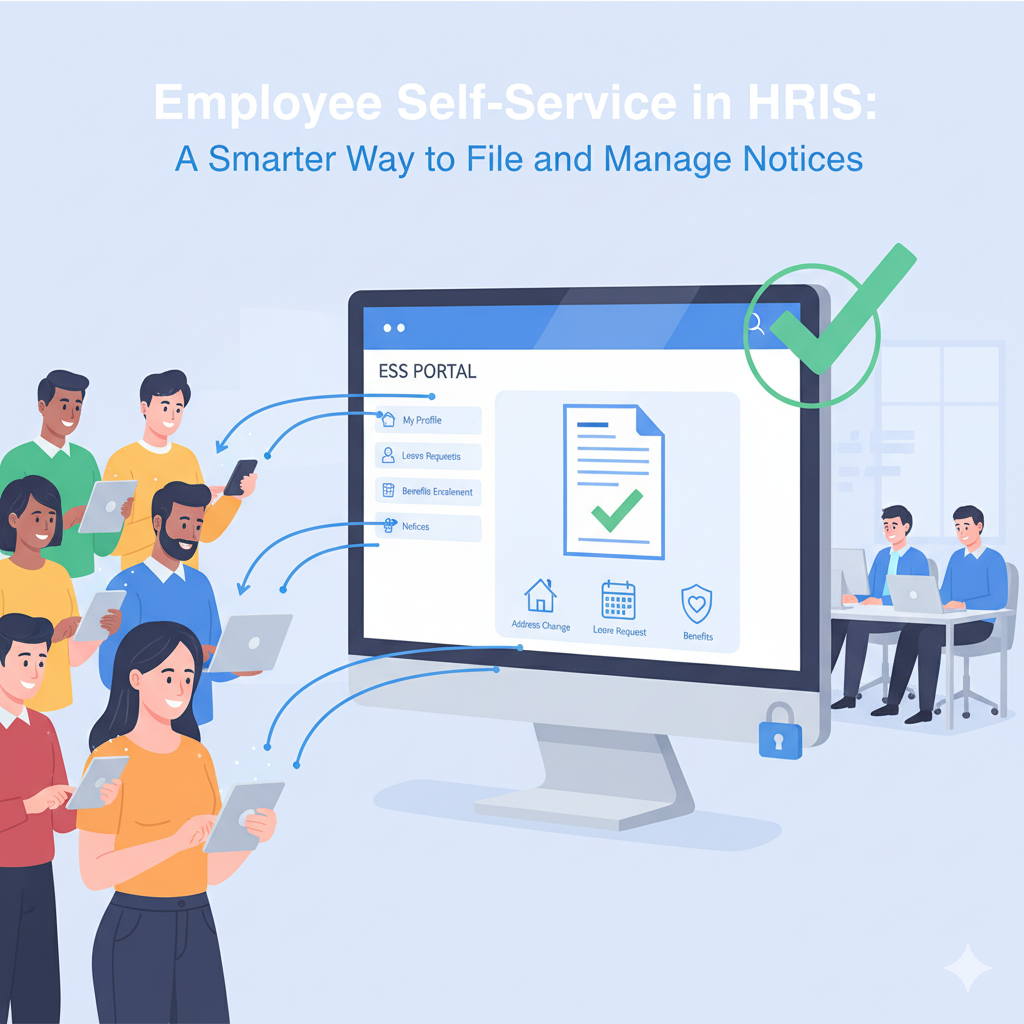
Employee Self-Service is a feature within an HR Information System (HRIS) that allows employees to access, manage, and update their own HR information. Instead of relying on HR personnel for every transaction, staff can independently:
- File notices (leave, overtime, undertime, schedule changes, etc.)
- View attendance and payslips
- Update personal details
- Check approval status of requests
This digital transformation makes HR operations more efficient and reduces manual tasks for HR teams.
The Role of HRIS in Filing and Managing Notices
Traditionally, filing notices meant completing paper forms or sending emails, waiting for approval, and following up with HR. With HRIS self-service, this entire process becomes digital and automated.
Here’s how it typically works:
- Submission: The employee logs into the HRIS portal and selects the notice type (e.g., leave, overtime, or official business).
- Filing: Details such as date, reason, and duration are entered through a simple online form.
- Approval Workflow: The system routes the request automatically to the appropriate supervisor or HR officer.
- Notification: Both employee and manager receive real-time updates on the approval status.
- Recordkeeping: Once approved, the record is automatically stored in the employee’s digital file for reference.
This process ensures transparency, reduces errors, and provides an audit trail for compliance and reporting.
Key Benefits of Employee Self-Service in Filing Notices
✅ 1. Faster and More Efficient Processes
Employees can file notices anytime, anywhere—no waiting for HR office hours or manual processing.
💡 2. Less Administrative Work for HR Teams
Automating the filing and approval process allows HR staff to focus on strategic initiatives rather than repetitive data entry.
🔒 3. Enhanced Accuracy and Data Security
Digital forms reduce human error and ensure that employee data is securely stored and easily retrievable.
📊 4. Improved Transparency and Accountability
Employees can track the status of their notices and approvals in real time, reducing follow-up emails and confusion.
🌐 5. Better Employee Experience
Self-service fosters trust and empowerment, allowing employees to manage their HR-related tasks conveniently through a user-friendly interface.
Best Practices for Implementing ESS in HRIS
To maximize the benefits of Employee Self-Service in HRIS, consider these best practices:
- Choose an intuitive HRIS platform that supports mobile access and integrates with your payroll and attendance systems.
- Train employees and supervisors on how to use the self-service portal effectively.
- Automate notifications and reminders to keep the approval process smooth and timely.
- Ensure data privacy compliance with proper access controls and audit logs.
- Regularly update and optimize workflows to align with company policies and evolving needs.
Why Modern Businesses Are Shifting to HRIS Self-Service
The rise of digital HR management is more than a trend—it’s a necessity. Businesses adopting HRIS with self-service features are experiencing:
- Up to 50% reduction in HR administrative workload
- Higher employee engagement and satisfaction
- Improved compliance and record accuracy
- Seamless integration with payroll and attendance systems
By implementing a self-service model, companies not only streamline their internal processes but also demonstrate a commitment to transparency and empowerment.
Conclusion
In the modern workplace, Employee Self-Service in HRIS is no longer optional—it’s a strategic advantage. By allowing employees to file and manage their own notices digitally, organizations save time, cut down on paperwork, and enhance employee satisfaction.
Ultimately, it’s about creating a smarter, more efficient, and employee-centered HR environment—one that benefits everyone from HR professionals to frontline staff.