


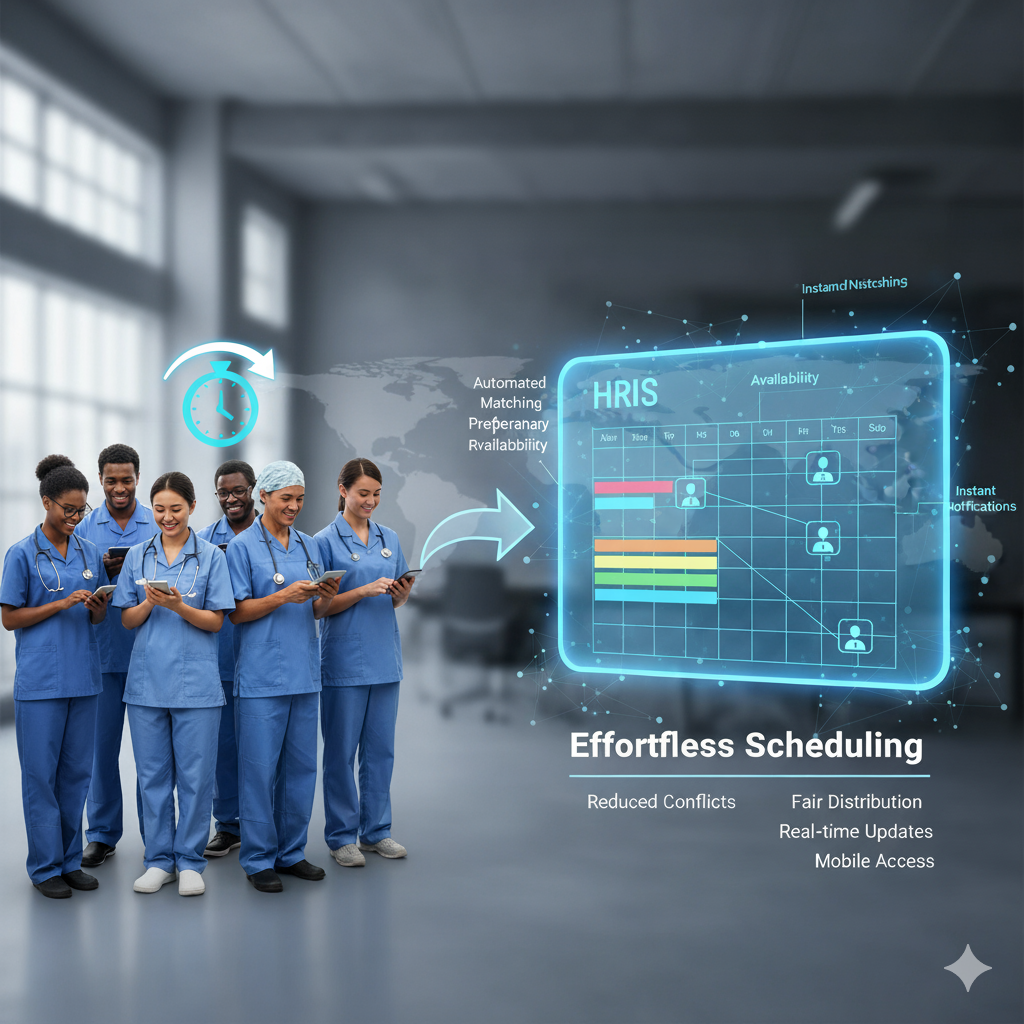
In dynamic workplaces, employee schedules often need to be adjusted to meet operational demands. Whether it’s covering an absent coworker, managing seasonal workload spikes, or accommodating personal employee requests, temporary shift scheduling has become a common practice.
However, managing these schedule changes manually—through spreadsheets, paper forms, or emails—often leads to confusion, miscommunication, and payroll discrepancies. That’s where a Human Resource Information System (HRIS) makes a big difference.
By digitizing and automating scheduling tasks, HRIS systems simplify temporary shift scheduling for employees while improving transparency and efficiency for HR and managers.
What is Temporary Shift Scheduling?
Temporary shift scheduling refers to short-term changes in an employee’s work hours or shift assignment. This can include:
- Adjusting start and end times for a day
- Switching shifts with another employee
- Adding or reducing work hours temporarily
- Assigning employees to different teams or work sites
These changes are essential for ensuring business continuity, but without a structured system, they can create scheduling conflicts and payroll errors.
The Problems with Manual Shift Scheduling
Organizations that still rely on manual shift scheduling often encounter challenges such as:
- Miscommunication – Employees may not be notified of schedule changes on time.
- Overlapping or missed shifts – Errors in manual entry lead to scheduling conflicts.
- Payroll discrepancies – HR struggles to match shift records with actual hours worked.
- Administrative burden – HR spends hours updating and verifying schedules.
- Low employee satisfaction – Lack of transparency frustrates staff when changes aren’t communicated properly.
How HRIS Simplifies Temporary Shift Scheduling
An HRIS system automates the entire scheduling process, reducing errors and improving workforce flexibility. Here’s how:
Digital Shift Requests and Approvals
Employees can request temporary shift changes directly in the HRIS portal or mobile app, while managers can review and approve instantly.
Real-Time Notifications
Once approved, employees receive instant notifications about schedule changes, ensuring no miscommunication.
Automatic Updates to Attendance and Payroll
Shift changes automatically reflect in attendance records and payroll computations, ensuring accurate salary processing.
Improved Workforce Flexibility
Managers can easily adjust staffing based on workload, ensuring optimal productivity.
Transparent Scheduling
Employees can view their updated schedules anytime, reducing confusion and disputes.
Benefits of Automating Temporary Shift Scheduling with HRIS
✅ Efficiency and Time Savings: HR no longer needs to manually update spreadsheets or send endless emails.
✅ Improved Accuracy: Shift changes automatically sync with attendance and payroll, reducing human error.
✅ Better Employee Experience: Employees gain control and visibility over their schedules, improving satisfaction and morale.
✅ Compliance with Labor Laws: HRIS enforces company policies and labor regulations (e.g., required rest hours, overtime rules).
✅ Workforce Optimization: Managers can ensure proper staffing levels by easily adjusting temporary shifts.
Best Practices for Using HRIS in Temporary Shift Scheduling
- Enable self-service features so employees can request changes digitally.
- Integrate HRIS with payroll to ensure accurate compensation.
- Train managers and employees on how to use the scheduling tools.
- Leverage reporting features to analyze shift patterns and workforce needs.
- Ensure mobile access so approvals and notifications can happen in real time.
Conclusion
Temporary shift scheduling is a vital part of workforce management, but handling it manually creates inefficiencies, errors, and frustration. By leveraging an HRIS system, companies can simplify the process, improve accuracy, and enhance employee satisfaction.
In short, HRIS systems transform temporary shift scheduling into a seamless, transparent, and efficient process that benefits both employees and employers.